For California colleges and schools that want immersive courses, Dreamscape Learn in Culver City offers the most established ready-made VR curriculum, and EON Reality in Irvine covers the widest range of subjects and sectors. Todor3D, also in Culver City, is the pick for a custom lab built around a specific syllabus, while AVATAR Partners, Specular Theory, AReality3D and Strivr cover authoring tools, custom simulators, AR for math and workforce training.
| # | Company | City | Ready-made or custom | Devices named on site | Sector | Reviews |
|---|---|---|---|---|---|---|
| 1 | Dreamscape Learn | Culver City | Ready-made curriculum plus Developer Kit | Installations, portable carts, online | K-12, higher education | — |
| 2 | EON Reality | Irvine | Platform and content library | Smartphone AR, 3D on screen | Education, industry, government | Google 4.0 · 4 |
| 3 | Todor3D | Culver City | Custom development | Standalone Meta Quest | Higher education, training | Clutch 5.0 · 25 |
| 4 | AVATAR Partners | Irvine | No-code XR authoring platform | Not stated | Workforce, education | Google 4.0 · 1 |
| 5 | Specular Theory | Marina del Rey | Custom VR training | Mobile VR headset | Defense, workforce | — |
| 6 | AReality3D | San Francisco | AR product for math worksheets | Not stated | K-12 math | Google 5.0 · 1 |
| 7 | Strivr | Not stated | Enterprise XR training platform | Meta Quest, Pico, HTC Vive, Apple Vision Pro | Workforce training | — |
How We Ranked California VR Education Developers
We opened each company's website and confirmed that it builds immersive learning, in VR or AR, for schools, colleges or training programs. We then noted whether it offers ready-made content or custom development, which devices it supports and which sectors it serves.
Documented results with education partners counted most, followed by a California base and public examples of built experiences. One studio from our initial list was dropped because its website could not be opened.
Dreamscape Learn leads because it has named university partners and a curriculum already in classrooms. Todor3D is third: its VR lab is a single custom project, built for one university, rather than a library used at many institutions.
Seven Teams Building Immersive Learning
Dreamscape Learn
Dreamscape Learn is based at 5730 Buckingham Pkwy in Culver City and produces story-driven immersive curriculum for K-12 and higher education, with Arizona State University and Merced College named on its site. Formats range from permanent installations to portable carts and online delivery.
Its Developer Kit lets partner institutions create and publish their own immersive learning experiences. That mix of ready content and authoring makes it the first call for colleges planning a campus-wide program.
EON Reality
EON Reality lists its global headquarters at 18 Technology Drive in Irvine. Its products, including EON-XR, serve education, government, healthcare, manufacturing, defense and energy, with AR on smartphones and 3D on screens.
The breadth of sectors is its main strength. A community college that trains for both academic and technical careers can use one vendor across departments.
Todor3D — Culver City, Los Angeles
Todor3D is a product studio founded in 2020, with an office at 6101 W Centinela Ave #110 in Culver City and a 40+ person team. Its AR and VR practice works in Unity, WebXR, 8th Wall, ARKit and ARCore, and education and e-learning is one of its listed industries.
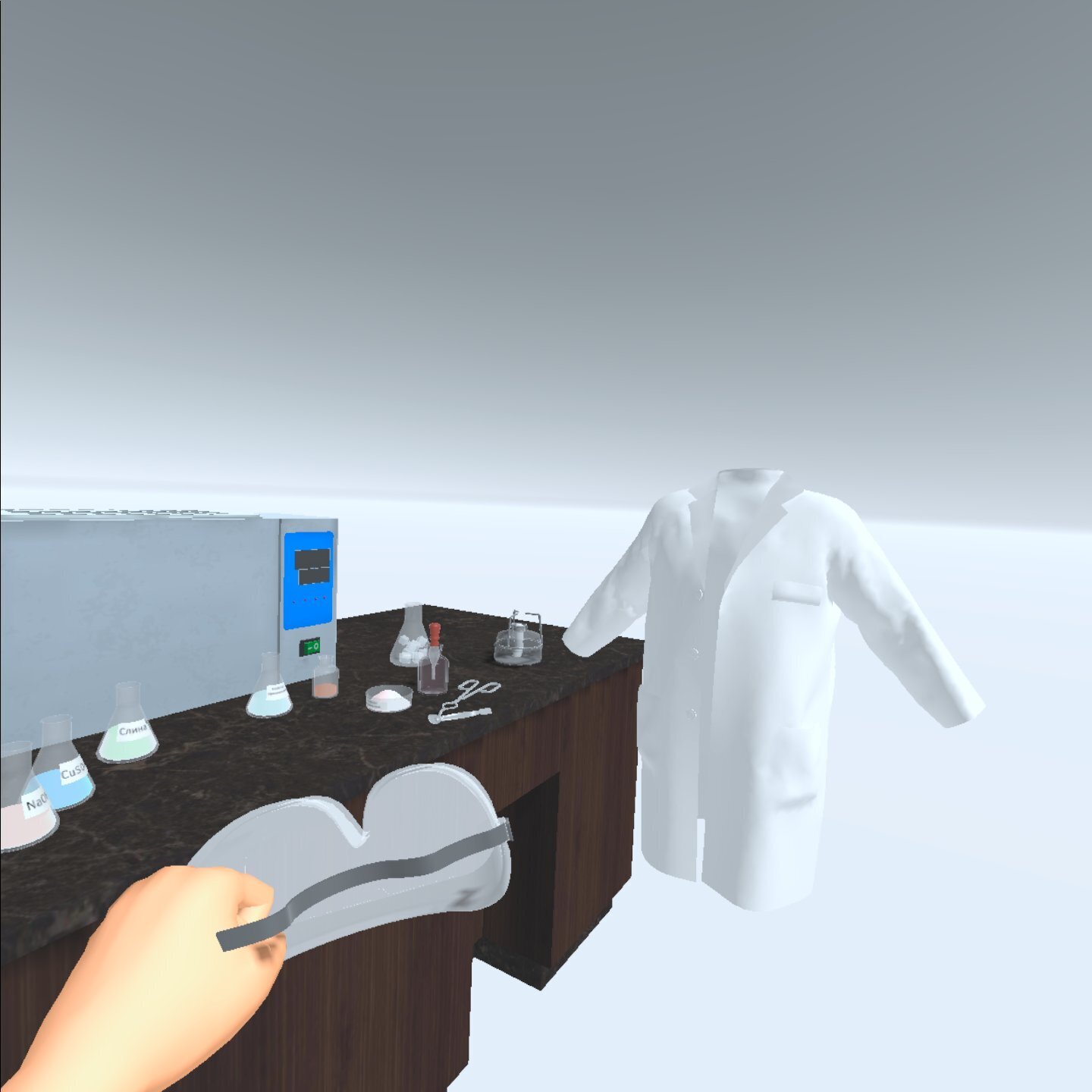
The Todor3D VR education team built a VR chemistry lab for Odessa State Agrarian University in one month, within a $10,000–50,000 budget. Students follow the exact sequence a professor defines, handling pipettes, test tubes and reagents with their hands in Unity with the XR Interaction Toolkit and Obi Fluid, while the simulation tracks mistakes. It runs on standalone Meta Quest headsets, and the MVP was demonstrated to the university's leadership.
The lab was built because reagents were costly to buy and store, some were toxic, and new rules restricted the use of live animals in student labs. A checkpoint system lets students resume mid-procedure, and the error tracking opens the way to automatic assessment. The university is planning next steps after the MVP, and the same foundation can grow into a library of lab exercises.
AVATAR Partners
AVATAR Partners offers XRcreate, which it describes as a patented, AI-powered, no-code XR authoring platform. Its site says the parent company is headquartered in Irvine, and its sectors include aerospace, military, manufacturing, healthcare and education.
A no-code tool suits training departments that want instructors to build and update XR lessons themselves instead of commissioning each one.
Specular Theory
Specular Theory delivers custom VR training, with its Google listing at 333 Washington Blvd in Marina del Rey. Its site describes a C-17 virtual cockpit trainer on a mobile VR headset and a Direct to Phase II SBIR award from the US Air Force for aerial refueling training.
That defense work shows experience with high-stakes procedural training, which carries over to technical programs at colleges and training centers.
AReality3D
AReality3D is based at 1 Market St in San Francisco and builds PlatoAR, an augmented-reality product for mathematics worksheets. The app recognizes a printed worksheet and adds matching math content on top of it.
It is AR rather than VR and narrow in scope, but it suits K-12 schools that want immersive content without buying headsets.
Strivr
Strivr runs an enterprise XR training platform that supports Apple Vision Pro, Meta Quest, Pico, HTC Vive and 2D desktop. Its sectors are logistics, manufacturing, retail, quick-service restaurants and healthcare.
For California training centers that prepare students for front-line jobs, its workforce focus is the closest match on this list.
A Ready-Made Library or a Lab Built Around Your Syllabus
Ready-made content is the faster, cheaper route when your course covers standard topics that a vendor has already built, such as introductory biology or workplace safety. You license it, train instructors and start teaching within a term.
A custom build makes sense when the procedure is specific to your program, the sequence must match your instructor's method, or assessment has to follow your grading rules. The Odessa lab was built that way: students can only progress by completing each step correctly, in the order the professor sets.
| Factor | Ready-made library | Custom lab |
|---|---|---|
| Time to first class | Weeks | One to a few months |
| Fit to syllabus | Close, not exact | Exact sequence and terminology |
| Assessment | Vendor's built-in scoring | Your rules, your error tracking |
| Ownership | License | Your institution's application |
| Ongoing cost | Annual subscription | Support and updates |
Realism is where custom labs earn their cost. In the Odessa lab, liquids are simulated with Obi Fluid, so students draw reagent into a pipette, dispense measured drops and mix, rather than clicking a button labeled "add reagent." Ask any vendor to show how its simulation handles the one physical action your students most often get wrong.
Many institutions use both. They license standard content for general courses and commission one custom lab for a procedure central to their own program.
Standalone Headsets Make Pilots Possible
Older VR setups needed a gaming PC for every headset, cables, and a dedicated room. Standalone headsets such as Meta Quest run the application on the device itself, which changes what a pilot costs and where it can happen.
A department can buy a handful of headsets, load one application and run sessions in an ordinary classroom. The Odessa lab took advantage of this: the MVP left the lab for live demonstrations to the rector and leadership and a university open day, where visitors put on a headset and ran the experiment themselves.
Portability also helps with funding. A pilot that a dean, a donor or a ministry official can try in five minutes makes a stronger case for a full program than a slide deck or a recorded video.
Plan the practical side early. Someone has to charge, clean, update and store headsets, and students who wear glasses or are prone to motion sickness need alternatives.
FAQ
How much does a VR education pilot cost?
Cost depends on the number of procedures, the realism of interactions such as liquids, assessment features and the headsets supported. As a reference, Todor3D's VR chemistry lab was built in the $10,000–50,000 band. Platforms and libraries are licensed per seat or per site.
How long does it take to build a VR lab?
A focused pilot covering one procedure can be built in about a month; the Odessa lab took one month to MVP. A full library of exercises takes longer, mostly because each procedure needs expert review.
How are students assessed in VR?
The simulation can record each step, mistakes, timing and retries, then report a score. Agree with faculty which errors matter and how they map to grades before development starts.
What does the instructor need to provide?
A written step-by-step procedure, photos or videos of the real equipment, common student mistakes and time for two or three review sessions during development.